 FoundStart
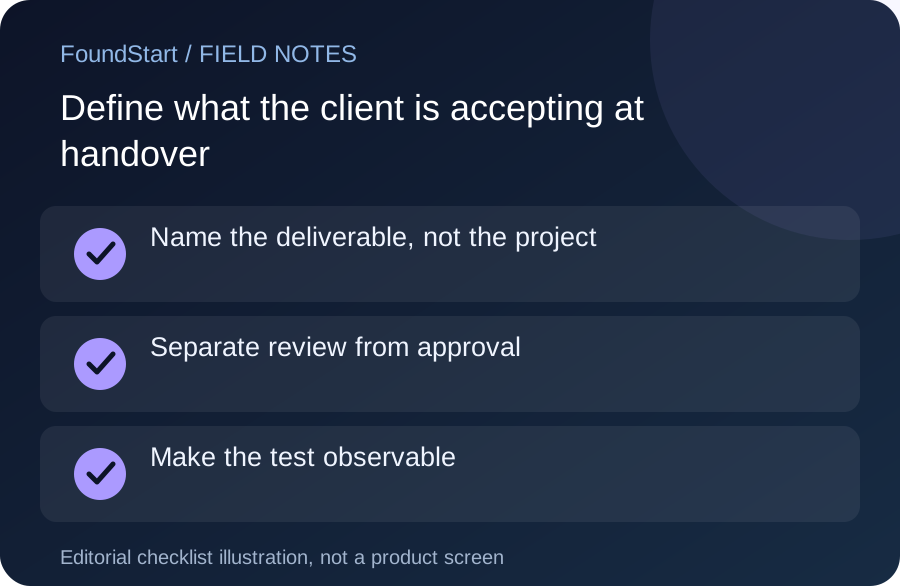
Name the deliverable, not the project
A handover note should identify the exact file, page or service being reviewed. Use a version label and a working reference. “The project is done” leaves both sides guessing whether that includes training, source files or future support. This is a practical record, not a substitute for the agreed contract.
Separate review from approval
Write who will review the work and what counts as acceptance. A download receipt proves a file was received, not that its contents were approved. Use separate labels for received, under review, accepted and changes requested. Do not turn silence into approval unless the actual agreement establishes that rule.
Make the test observable
For a small website handover, a review item might be opening the contact page at the agreed mobile width and checking its actual submission route. Record the result and any exception. Do not mark an entire site accepted because one page opened or an automated build completed.
Keep exceptions with the decision
If the client accepts the design but an integration still needs their account access, keep those facts together. Give the remaining item an owner and a next check. Avoid hiding it in a separate chat that the next person handling the project may never see.
Close with a usable record
A useful closeout lists the accepted version, review date, reviewer and outstanding exceptions. Keep the prior version until the agreed retention decision is made. The record should let another team member understand what passed without asking the client to repeat the whole conversation.