 FoundStart
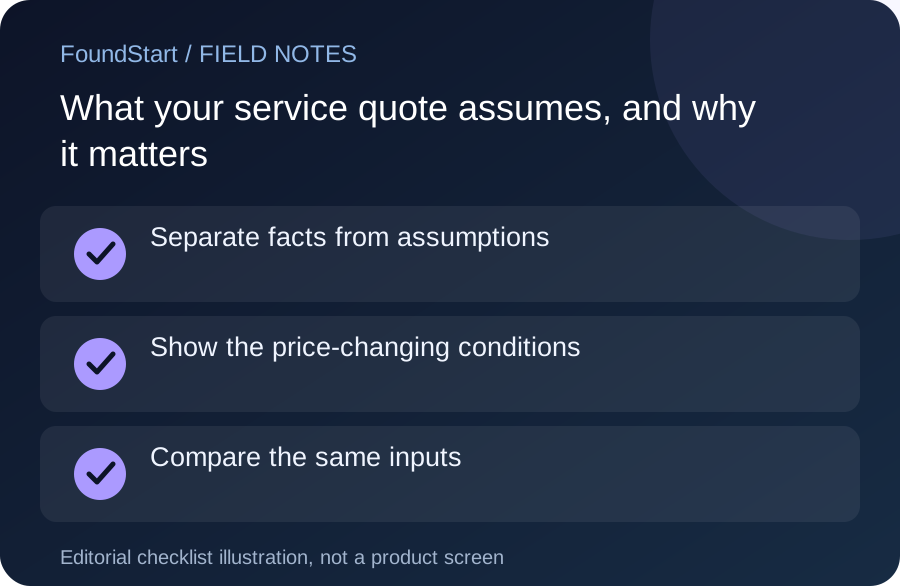
Separate facts from assumptions
A service quote can look precise while depending on facts nobody checked. Before comparing the total, list the inputs behind it: number of entities, countries involved, number of documents, languages, expected response time and who supplies the information. Mark each as confirmed, estimated or still unknown. This is a planning method, not legal or tax advice.
Show the price-changing conditions
Ask the supplier what happens if an assumption changes. For example, a quote may cover one document language but not translation, or one named company but not additional entities. Record whether the change triggers a fresh quote, an hourly charge or a separate service. Do not turn silence into an inclusive promise.
Compare the same inputs
Give competing suppliers the same short scenario. A lower total for fewer deliverables is not a like-for-like saving. Keep provider fees separate from third-party charges, and ask which figures remain estimates. Before paying, request the current written scope, exclusions, delivery conditions and refund terms for your own case.
Make the agreement usable
A useful handover is one page: agreed inputs, included outputs, open questions, expiry date of the quote and a named contact for changes. Link that page to the accepted quote rather than scattering qualifications across chats. If a condition remains unresolved, leave it open instead of hiding it in the final total.